
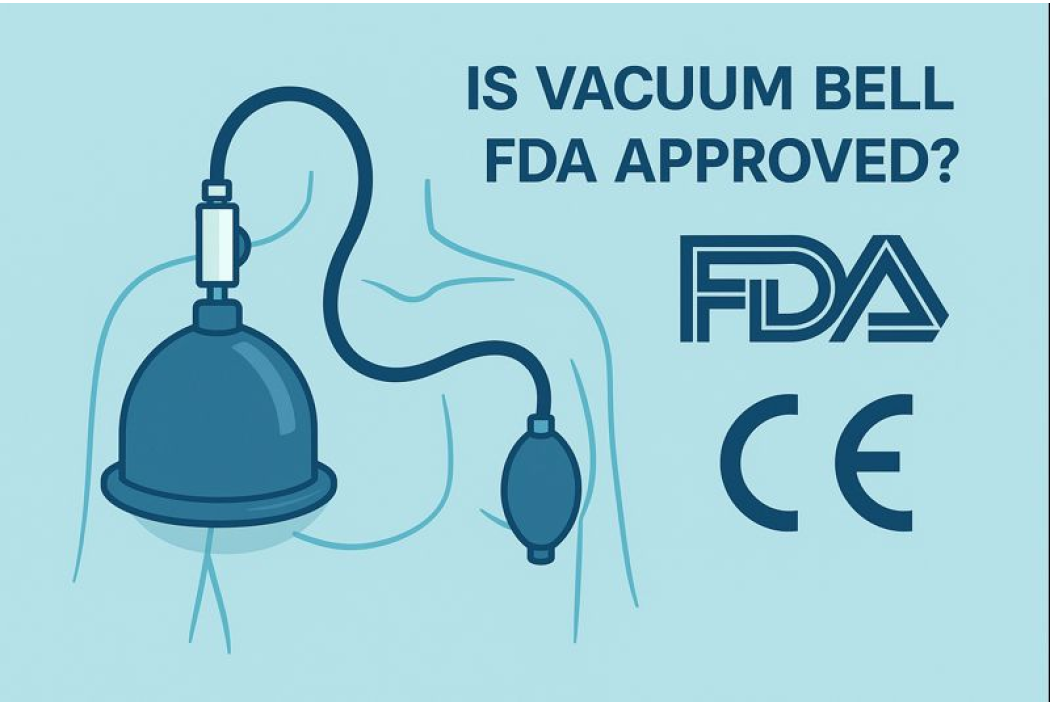
Is Vacuum Bell FDA Approved? Key Facts
Is Vacuum Bell FDA Approved? Key Facts
Vacuum Bell therapy is one of the leading non-surgical methods for improving Pectus Excavatum. However, some websites claim that their devices are “FDA Approved”, which can be confusing. In reality, Vacuum Bell devices are not FDA approved and cannot be approved under FDA regulations.
What Does FDA Approval Mean?
The FDA grants formal approval only for high-risk medical devices, such as:
- Implantable devices
- Class III medical devices
- Products that require clinical trials and PMA (Pre-Market Approval)
Vacuum Bell devices do not fall into these categories.
Are Vacuum Bell Devices FDA Approved?
Short answer: No. Vacuum Bell devices are generally classified as:
Class I – low-risk, non-invasive medical devices.
For most Class I devices, the FDA:
- does not approve the device,
- does not review clinical trial data,
- does not require pre-market testing,
- does not issue individual approval certificates.
This is normal and fully compatible with FDA regulations for low-risk devices.
What About “FDA Registered” or “FDA Listed”?
Some manufacturers may choose to register their facility and devices with the FDA. This process is called:
- Establishment Registration
- Device Listing
However, it is very important to understand:
FDA Registration ≠ FDA Approval.
Registration simply means that the manufacturer has declared their device category to the FDA. It does not mean that the FDA has tested, reviewed, or endorsed the product.
Why Do Some Websites Claim “FDA Certified Vacuum Bell”?
In most cases, these claims appear because of:
- Misunderstanding of FDA terminology,
- Confusing “registered” with “approved”,
- Using marketing language without a technical basis.
The FDA does not issue “FDA certificates” for Vacuum Bell devices.
What Certification Actually Matters? (CE / MDR)
For Vacuum Bell devices, the primary regulatory framework is:
CE Certification as a Class I Medical Device under the European MDR.
CE certification requires compliance with:
- Medical-grade, biocompatible materials,
- Documented manufacturing quality standards,
- Risk management according to ISO 14971,
- Technical documentation and labelling,
- Clinical evaluation under MDR requirements.
How to Choose a Safe Vacuum Bell Device
When comparing different devices, it is helpful to look for:
- Clear CE Class I Medical Device information,
- Legal manufacturer name and address,
- Medical-grade silicone and high-quality materials,
- Transparent instructions for use and safety information,
- Reliable customer service and warranty,
- Cautious wording instead of claims like “FDA Approved Vacuum Bell”.
Conclusion
Vacuum Bell devices for Pectus Excavatum are not FDA approved, because most Class I devices are not part of the FDA approval system. For these products, the meaningful regulatory pathway is CE Class I Medical Device certification under the European MDR.
Choosing a transparent, well-documented and certified manufacturer is essential for safe and effective therapy.
This article is for informational purposes only and does not constitute legal or regulatory advice.